
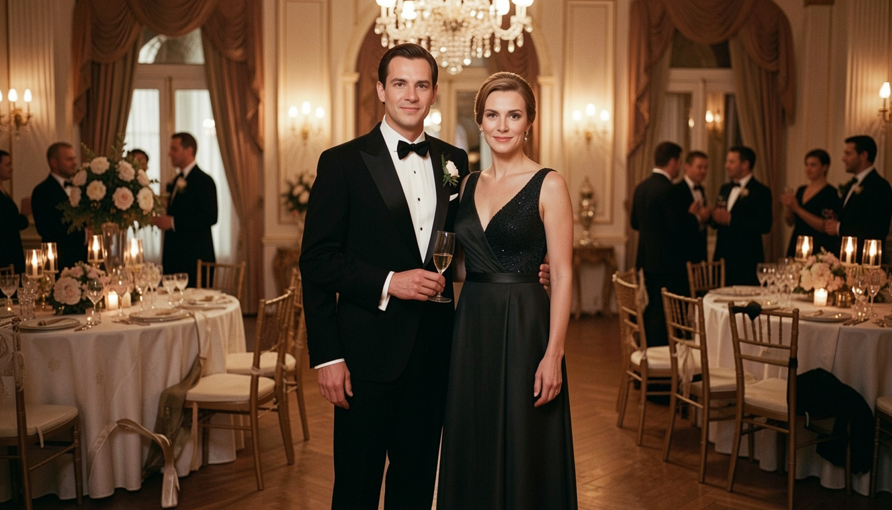
Formal events have a way of making people nervous, even folks who are usually pretty relaxed everywhere else. There’s something about the candles, the seating charts, and the “black tie optional” line on the invitation that makes even confident people second-guess themselves. The good news is that making a solid impression at one of these evenings isn’t about being perfect. It’s about a handful of small things done consistently — timing, appearance, conversation, and general awareness of the room around you.
Show Up on Time, Not Fashionably Late
The old idea that arriving late makes you look important is mostly a myth at formal events. Hosts plan seating, timing of speeches, and the flow of the evening around a schedule. Walking in fifteen minutes after everyone’s seated draws attention for the wrong reasons — you become the person the waiter has to squeeze a chair in for, the one who missed the welcome toast.
Aim to arrive within the first ten minutes of the stated start time. Not earlier than that either, since arriving too early can leave you standing around an empty room with the catering staff. That window gives you time to find your seat, grab a drink, and settle in before things really get going.
Dress Like You Understand the Room
Formal doesn’t always mean the same thing twice. A charity gala at a hotel ballroom and a private dinner at someone’s home might both say “black tie,” but the energy can be different. When in doubt, check the invitation twice and, if you’re still unsure, ask the host directly. Nobody minds a quick question about dress code — it shows you care enough to get it right.
For men, a well-fitted suit or tuxedo beats an expensive one that doesn’t sit right on the shoulders. For women, a dress that lets you move, sit, and eat comfortably will always look better than one you’re constantly adjusting. Comfort reads as confidence. Fidgeting reads as nerves, no matter how nice the fabric is.
Grooming matters just as much as the outfit. Clean shoes, trimmed nails, and hair that’s been given five extra minutes of attention go a long way. These are small details, but people notice them subconsciously even when they can’t name exactly what looks polished.
Master the Art of Small Talk
This is where most people freeze up. The trick is to stop thinking of small talk as filler and start treating it as a way to make someone feel comfortable. Ask open questions — how someone knows the host, what brought them to the city, what they thought of the appetizer. People generally enjoy talking about themselves when it’s done with genuine curiosity rather than interrogation.
Avoid controversial topics unless you know the room well. Politics, religion, and money are the classic minefields, and formal dinners are not the place to test how strongly someone feels about them. Stick to travel, food, art, or shared acquaintances — safe ground that almost always leads somewhere interesting.
And don’t be afraid of pauses. Silence at a dinner table isn’t a failure. Not every gap needs to be filled with chatter.
Table Manners Still Matter
Nobody expects you to memorize the entire etiquette book, but a few basics will keep you from standing out for the wrong reasons. Napkin on your lap, not tucked into your collar. Start eating once the host or the majority of the table has their food. Cutlery works from the outside in. Phones stay off the table — glancing at a screen mid-conversation is one of the fastest ways to seem disinterested, even if you don’t mean it that way.
If you’re unsure which glass or fork to use, watch what others do or simply follow the lead of the host. Nobody’s grading you on precision — they’re noticing whether you’re present and engaged.
Having the Right Company for the Evening
Not everyone wants to attend one of these events alone, and there’s nothing wrong with that. A good plus-one can make the whole night easier — someone to talk with between conversations, someone who helps you feel grounded in a room full of strangers. If you don’t have someone to bring and don’t want to go solo, a premium escort service is one option some people quietly use for these kinds of formal occasions. It’s a practical solution for anyone who wants an elegant companion for the evening without the complications of asking a friend or navigating awkward introductions.
The key, whoever you bring, is making sure they’re comfortable and included. Introduce them properly, keep the conversation flowing their way too, and don’t leave them standing alone while you network across the room. A good companion reflects well on you only if you treat the evening as a shared experience, not a solo mission with an accessory.
Read the Room and Know When to Leave
Staying too long at the end of an event can be just as noticeable as arriving too late at the start. Once the speeches are done, the dance floor is thinning out, and the staff start clearing tables, that’s usually your cue. Thank the host personally before you go — a quick, sincere word means more than a long, awkward goodbye tour around the room.
Ultimately, making a great impression isn’t about flawless execution. It’s about being present, respectful of the people around you, and comfortable enough in yourself that others feel at ease too. Get those basics right, and the rest tends to fall into place naturally.
Quick Questions People Often Ask
What if I don’t know anyone at the event?
Head toward the bar or appetizer table — people naturally gather there and conversations start easily. Introduce yourself simply, mention how you know the host, and let the conversation grow from there.
Is it rude to leave a formal dinner early?
Not if you do it politely. Thank the host quietly, avoid making a scene, and slip out during a natural lull rather than in the middle of a toast or speech.
What should I do if I make an etiquette mistake?
Laugh it off gently and move on. Most people barely notice small missteps, and dwelling on them draws more attention than the mistake itself.
 Albert Newman has been a dedicated contributor to Top Wellness Activity Hub, leveraging his extensive background in digital content creation to enrich the platform with engaging and valuable information. Known for his meticulous research and a knack for simplifying complex wellness topics, Albert focuses on producing content that is both informative and approachable. His articles cover a broad spectrum of wellness subjects, from healthy eating habits to the latest trends in yoga and fitness. Albert's ability to break down intricate health concepts into easily digestible insights has made the platform a trusted source for wellness advice.
Beyond his writing, Albert is also deeply involved in the content strategy and editorial planning of the platform. His collaborative approach ensures that each piece of content aligns with the platform’s mission to empower users on their wellness journey. Albert is always exploring innovative ways to engage readers, whether through interactive guides or personalized wellness tips. His commitment to creating high-quality, reader-centric content plays a significant role in the platform’s ongoing success.
Albert Newman has been a dedicated contributor to Top Wellness Activity Hub, leveraging his extensive background in digital content creation to enrich the platform with engaging and valuable information. Known for his meticulous research and a knack for simplifying complex wellness topics, Albert focuses on producing content that is both informative and approachable. His articles cover a broad spectrum of wellness subjects, from healthy eating habits to the latest trends in yoga and fitness. Albert's ability to break down intricate health concepts into easily digestible insights has made the platform a trusted source for wellness advice.
Beyond his writing, Albert is also deeply involved in the content strategy and editorial planning of the platform. His collaborative approach ensures that each piece of content aligns with the platform’s mission to empower users on their wellness journey. Albert is always exploring innovative ways to engage readers, whether through interactive guides or personalized wellness tips. His commitment to creating high-quality, reader-centric content plays a significant role in the platform’s ongoing success.